
Overview
What Are Fleet Wraps?
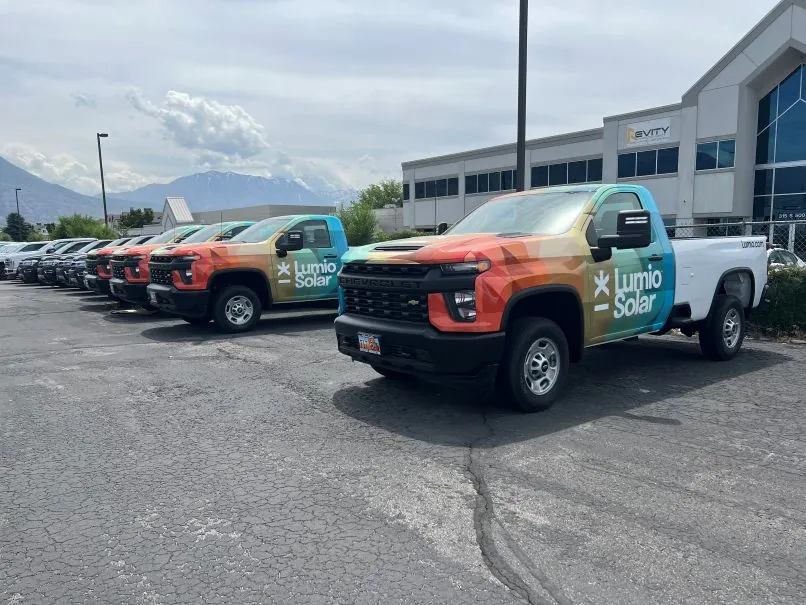
Fleet wraps are printed vinyl graphics applied to multiple business vehicles using one consistent design. The vinyl goes over the factory paint and carries your logo, colors, contact details, and any required markings.
What separates a fleet wrap from a one-off wrap is the planning behind it. The design has to work on vans, pickups, and box trucks at once. Colors have to match from the first vehicle to the twentieth. Installs have to happen without pulling half your crew off the road. For single-vehicle detail, see our pages on vehicle wraps, truck wraps, and van wraps.
Full Wraps, Partial Wraps and Fleet Graphics
Fleets usually choose between three coverage levels based on budget, vehicle mix, and how much attention each vehicle should draw. Some mix them, with full wraps on high-visibility trucks and lettering on support vehicles.
Option | Coverage | Best for | Budget level |
|---|---|---|---|
Full wrap | All painted body surfaces | Maximum visibility; changing the vehicle’s color | High |
Partial wrap | A section, such as the rear half or sides, blended with the paint | Strong branding at a lower cost than full coverage | Medium |
Fleet graphics and decals | Logo, phone, website, unit number, and cut vinyl lettering | Large fleets, tight budgets, compliance markings | Low |
A partial wrap works best when your brand color is close to the paint color, because the paint becomes part of the design. Our guides on full wrap vs partial wrap vs vehicle graphics and fleet wraps vs vehicle graphics vs lettering go deeper.
Why Fleet Wraps Work as Advertising
A wrapped vehicle advertises wherever it drives, parks, or works. A van covering the same neighborhoods each week reaches the same people again and again. That repetition builds recall, so your name comes to mind when they need the service.
A matching fleet also makes a first impression at the customer’s door. Marked vehicles tell customers who is in the driveway and show that the business is organized before any work starts.
Results depend on fleet size, routes, and design clarity. Our article on fleet wrap advertising ROI covers how businesses measure the return.
Keeping a Fleet Consistent
A consistent fleet starts with one brand template that adapts to each make and model. A logo placed perfectly on a Ford Transit can land across a door seam on a Chevy Express. We fix the logo size, color blocks, and text hierarchy, then fit them to each vehicle’s body lines.
Matching Colors Across Print Batches
Vinyl printed months apart can shift in color if settings and materials change. Keeping your fleet’s print settings and materials on file helps later batches match the first.
Placing Vehicle Numbers and Contact Details
Unit numbers, phone, website, and USDOT numbers need set positions on every vehicle. Our vehicle lettering service handles these details, and our guide to USDOT number lettering rules explains display requirements.
Adding New Vehicles Later
A truck bought next year should match the ones already on the road. Saved files and specs make that possible without a redesign.
How a Fleet Wrap Program Works
A fleet wrap program runs in six steps, from your vehicle list to ongoing support.
- Fleet list. Send the make, model, and year of each vehicle. Body style and trim change the template, so an accurate list prevents fitting problems.
- Design and vehicle templates. We create the brand design and fit it to a template for each vehicle.
- Proof approval. You review a proof for each vehicle type and request changes before anything prints.
- Printing and lamination. Approved designs are printed on wrap vinyl and covered with a protective laminate.
- Scheduled installs. We install in groups that fit your schedule, keeping enough vehicles on the road for daily work.
- Additions, repairs, and removals. As vehicles join the fleet, get damaged, or leave it, we add, repair, or remove graphics.
Materials and Durability
Most fleet wraps use cast vinyl with a laminate, because cast film conforms to curves and typically outlasts cheaper films. Calendered vinyl can work for flat areas and simple lettering, but it is more likely to lift or shrink on complex shapes. Our article on cast vs. calendered vinyl explains the trade-offs.
To help a wrap last, hand-wash it with mild soap, keep high-pressure spray off the edges, and clean off fuel spills and bird droppings quickly. Utah sun and winter road salt add wear. See our vehicle wrap care tips for a routine your drivers can follow.
What Affects Fleet Wrap Cost
Fleet wrap cost depends mainly on how many vehicles you have, how large they are, and how much of each one you cover. A box truck takes more material and labor than a compact car.
Other factors include:
- Design complexity. Detailed graphics and many vehicle layouts take more design time.
- Vinyl type. Cast film costs more than calendered film.
- Removal of old graphics. Stripping existing decals or aged vinyl adds labor before installation.
Our fleet wrap cost guide breaks these factors down further.
Fleet Wraps for Utah Industries
Fleet wraps suit any business that sends vehicles to customers or covers a service area.
- Contractors: Branded trucks mark the job site and advertise to neighbors.
- HVAC and plumbing: Service vans making many daily stops put your name on every street they visit.
- Landscaping: Trucks parked curbside all day act as signs; trailer wraps extend the same look to trailers.
- Delivery: High daily mileage puts your brand in front of more drivers and pedestrians on every route.
- Property management: Marked maintenance vehicles help tenants recognize your staff on site.
- Healthcare transport: Clear markings help patients and facilities identify your vehicles.
For vehicles that double as personal cars, vehicle magnets let staff remove branding after hours.
Why Utah Fleets Choose Visibility Signs & Graphics
Design, printing, and installation all happen in-house, so one team handles the job from template to finished vehicle.
We schedule installs around fleet downtime, so vehicles keep working during the rollout. Your designs and specs stay on file, which makes repeat orders and new vehicles simple. If your fleet graphics are part of a bigger brand change, our logo design and rebranding service can update your identity first.
Fleet Wrap FAQs
How long do fleet wraps last?
Fleet wraps made with cast vinyl and laminate typically last several years. Actual life depends on the film, sun exposure, how the vehicle is stored, and how it is washed. Garaged, regularly washed vehicles usually keep their wraps looking good longer than ones parked outside.
Do fleet wraps damage the paint?
Fleet wraps applied to factory paint in good condition typically do not damage it, and they can help protect it from minor scratches and sun. Problems are more likely on repainted panels, chipped areas, or rust, where removal can lift loose paint. A surface check before install flags these areas.
Can you wrap different vehicle models with the same design?
Yes. We keep the logo, colors, and text layout consistent, then fit those elements to each vehicle’s doors, windows, and body lines, so a Transit, a pickup, and a box truck still read as one brand.
How long does it take to wrap a fleet?
It depends on the number of vehicles, their size, and the coverage you choose. Design and proof approval come first, then installs are scheduled in groups. Your quote should include a timeline so you can plan vehicle downtime.
Is a fleet wrap better than painting vehicles?
For most businesses, a fleet wrap is more flexible than paint. A wrap can carry detailed printed graphics, be updated after a rebrand, and be removed before resale. Custom paint is permanent and limited in detail. Paint can suit a solid-color fleet that will never change its look.
Can you add USDOT numbers to fleet graphics?
Yes, we can add USDOT numbers to fleet graphics as part of the design or as separate lettering. The number must be legible and placed where regulations require. Our guide to USDOT lettering rules covers display requirements, and we place the number consistently on each vehicle.
Can wraps be removed when we sell a vehicle?
Yes. Removing the vinyl uncovers the original paint, which can make resale easier. Removal is easiest when the wrap has not been left on well past its expected life.
Send us your vehicle list, and we’ll quote the full fleet.
Tell us how many vehicles you run, the year, make, and model of each, and whether you want full wraps, partial wraps, or lettering. We’ll come back with one quote for the whole fleet and an install schedule that keeps your vehicles on the road.