
Overview
Types of Real Estate Signs
Real estate listings use five main sign types: for-sale yard signs, post and panel signs, riders, open house and directional signs, and commercial for-lease signs.
For Sale Yard Signs and Frames
For sale signs are the basic listing sign: a printed panel held in a metal frame or on an H-stake in the front lawn. H-stakes are light, low-cost, and quick to push into soft ground, which suits short listings. Metal frames hold the panel flatter and steadier in wind, and many have hooks for hanging riders. Most agents keep a stack of yard signs ready so they can mark a new listing the day it goes live.
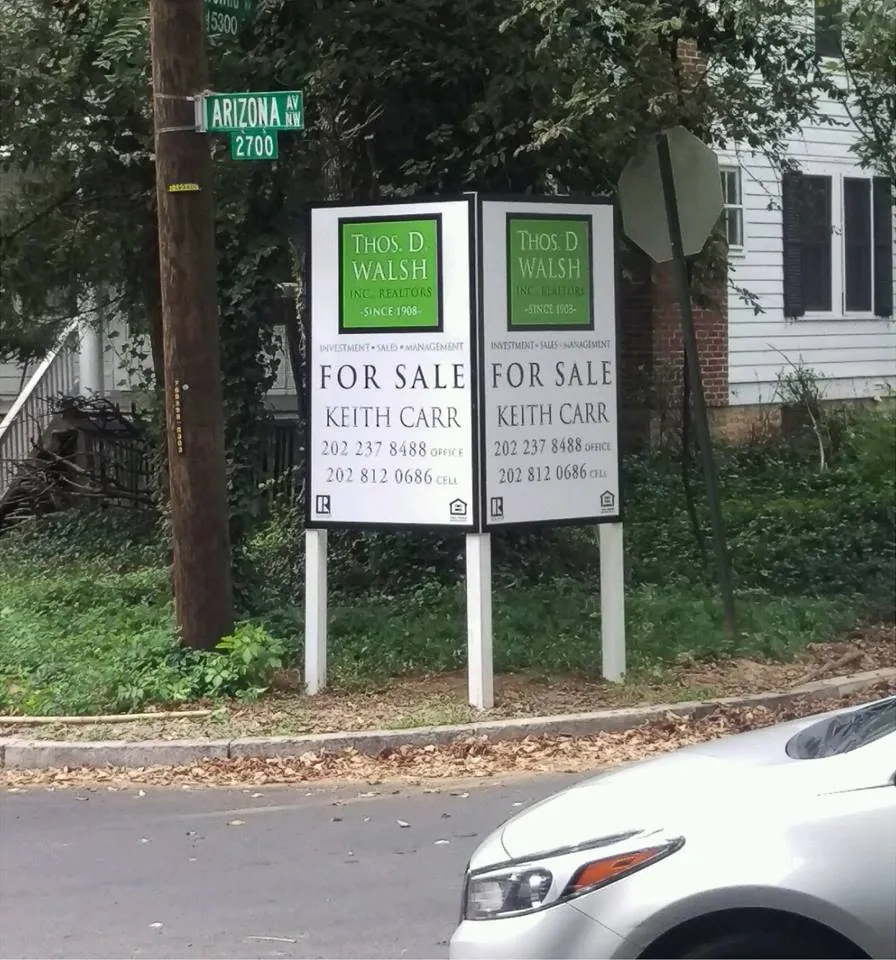
Post and Panel Signs
Post and panel signs use a tall upright post with a crossarm and a panel hanging below it. They sit higher than a yard sign, so they read over parked cars, fences, and winter snow, and they look more permanent, which many brokerages prefer for higher-priced homes and land. Our post and panel signs pair the post with a printed panel and room for riders.
Sign Riders
Real estate sign riders are small strips that attach above or below the main sign to add one message. Common riders include Sold, Under Contract, Pool, Price Reduced, the agent's name, and a QR code that opens the listing. Riders let one main sign keep working as the listing changes, so you swap a strip instead of replacing the panel.
Open House and Directional Signs
Open house signs and directional signs point buyers from the main road to the front door. A-frame signs fold flat for the trunk and stand on driveways and corners, while stake signs push into the ground at each turn. Weighted sidewalk signs stay upright in the wind better than lightweight frames. Cities and HOAs often limit where and how long these signs can stand, so check before you set them out.
Commercial For Lease and Development Signs
Commercial for lease signs and development signs are large panels that market lots, buildings, and upcoming projects to drivers passing at speed. They usually show the property type, available space, the broker's name, and a phone number. Coming-soon signs on future project sites build interest before work starts. Because these signs are larger and stay up for months, they are mounted on posts or attached to the building, and some cities require a permit.
Materials for Real Estate Signs
The right material depends on how long the sign will stand and how many times you plan to reuse it.
Material | Durability | Best for |
|---|---|---|
Corrugated plastic | Short-term; can bend in strong wind | Open houses, short listings, high-volume yard signs |
Aluminum | Long-term; resists bending and fading | Reusable yard panels, post and panel signs, riders |
Dibond / ACM | Long-term; stays flat and rigid at large sizes | Commercial for lease, development and site signs |
Corrugated signs are light and low-cost. Aluminum signs cost more up front but last through many listings. Dibond signs have a plastic core between two thin aluminum sheets, so a large panel stays flat instead of bowing on a commercial lot.
What to Put on a Real Estate Sign
A real estate sign needs four things: the brokerage name and logo, the agent's name, a phone number, and a website or QR code. Keep the wording short, because drivers see the sign for only a few seconds. After the brokerage name, make the phone number the largest text on the sign. If you add a QR code, scan the proof before printing to make sure it opens the right page. Realtor signs must also follow your brokerage's sign standards and state advertising rules, so check both before you order.
Signs for Brokerages and Teams
Brokerages and teams need sign inventory that looks the same for every agent and every listing. We keep your logo, colors, and layouts on file, so reorders match earlier prints. Bulk orders of panels, riders, and open house signs keep stock on hand during busy months and can lower the price per sign. Beyond the yard, we make office signs for brokerage locations and vehicle magnets that put the brand on an agent's car and can be removed for personal use.
Signs for Developers and Commercial Brokers
Developers and commercial brokers need larger signs that market a site through every phase of a project. Before work starts, a site sign tells passing drivers what is planned and who to contact. During the build, construction signs name the project and the team behind it, and large banners on site fencing add marketing space at a lower cost than rigid panels. As the project nears completion, leasing signs shift the message to available space. Once tenants move in, we update tenant panels on monument signs and provide property management signs.
How Ordering Works for Real Estate Signs in Utah
Ordering takes five steps, and nothing goes to print until you approve a proof.
- Choose sign types and quantity. Tell us which signs you need, the sizes, and how many of each.
- Send brand files and agent info. Send a vector logo (AI, EPS, SVG, or PDF), your brand colors, and each agent's name, phone number, and website.
- Proof. We send a digital proof showing layout, colors, and text. Check every phone number and spelling.
- Print. After you approve the proof, we print the order on the material you chose.
- Pickup, delivery, or installation. Pick up your signs, or ask about delivery and installation for post and panel and commercial signs.
Why Utah Agents and Brokers Choose Visibility Signs & Graphics
Utah agents and brokers choose us because one local shop handles every sign a listing needs, with consistent color from order to order.
- Local printing. We print in Utah, so proofs, pickups, and questions don't depend on out-of-state shipping.
- Consistent color. We match your brand colors on every run, so new signs don't look off next to older ones.
- Fast reorders. With your record files, reorders skip setup and go straight to proof.
- Small and large signs together. We print riders, open house temporary signs, and large commercial panels, so one order can cover a whole listing.
Real Estate Sign FAQs
What size are standard real estate yard signs?
The most common real estate yard sign sizes are 18 x 24 inches and 24 x 36 inches. The smaller size fits most residential lawns and standard metal frames. The larger size reads better on busy roads and bigger lots. Riders are usually 6 x 24 inches, and commercial listing signs are much larger, often several feet wide.
What is the best material for real estate signs?
The best material depends on how long the sign will stay up and whether you'll reuse it. Corrugated plastic is the low-cost choice for open houses and short listings. Aluminum lasts through many listings, so it suits reusable panels and riders. Dibond is best for large commercial signs that need to stay flat for months.
Can you add a QR code to my sign?
Yes, we can add a QR code to your sign or print it on a separate rider. The code can open the listing page, a virtual tour, or your agent profile. Make it large enough to scan from a few feet away, and test it on the proof before we print.
Do you install post and panel signs?
Yes, we can install post and panel signs as well as larger commercial listing signs. When you order, tell us the property address and where the sign should go. Before we install any post in the ground, the property should have underground utilities marked, and placement should follow HOA and city rules.
How quickly can I get open house signs?
Open house signs are one of the quickest jobs we print, especially when your artwork is already on file. Timing depends on quantity, material, and how fast you approve the proof. For a weekend open house, order early in the week and approve the proof the same day to leave time for printing.
Can you make large signs for commercial listings?
Yes, we make large signs for commercial listings, development sites, and coming-soon projects. These are usually Dibond panels on posts or attached to a building, or large banners on fencing. We size the text so it reads from the road. Some cities require a permit for larger signs, so check local rules before installation.
Get a Quote for Your Real Estate Signs
Send your brokerage logo and quantities for a quote.
Or call (801) 212-9987.