
Overview
What Is an Acrylic Sign?
An acrylic sign is made from acrylic sheet, a rigid plastic known chemically as PMMA (polymethyl methacrylate). Plexiglass is a common name for the same material. Acrylic is lighter and more impact-resistant than glass, and it cuts cleanly into custom shapes.
Sheets come in clear, frosted, colored, and mirrored versions. Common thicknesses run from about 1/8 in to 1 in. Thin sheets suit printed panels. Thicker sheets suit cut-out logos, standoff panels and shaped edges.
Acrylic is made in two ways. Cast acrylic is poured into molds and cured. It engraves with high contrast and gives polished cut edges. Extruded acrylic is pushed through a die. It holds a more consistent thickness and usually costs less. The right choice depends on the finish, the edge, and the budget.
Types of Acrylic Signs
Custom acrylic signs fall into six types, each with its own look and mounting method.
Standoff Acrylic Panels
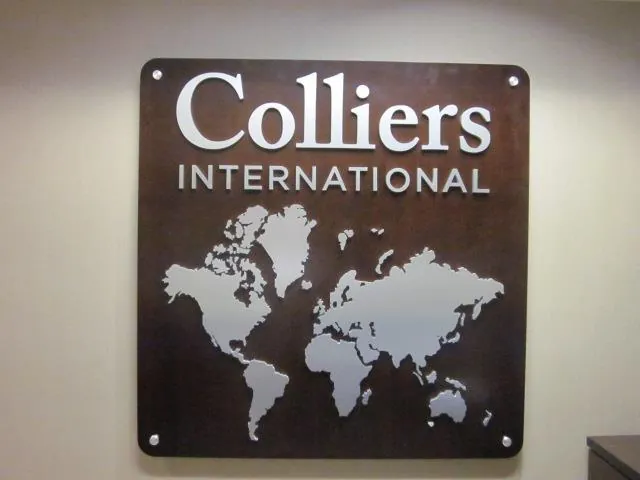
A standoff acrylic panel is a flat sheet held off the wall by metal standoffs, so it appears to float. The gap casts a soft shadow line behind the panel. Standoff acrylic signs suit company names, logos, and wall graphics in lobbies and conference rooms. Standoff hardware comes in finishes such as brushed aluminum and stainless steel.
Layered and Dimensional Acrylic
Layered acrylic stacks several cut pieces to add depth. Each layer can have its own color, finish, or thickness. The same method produces cut-out logos with relief from the wall. If you want standalone letter forms with a deeper profile, see our dimensional letters.
Reverse-Printed and Painted Acrylic
Reverse-printed acrylic carries its artwork on the back of a clear sheet, so the front face is smooth and glossy. The acrylic also shields the graphic from wipes and contact. Painted acrylic follows the same approach; solid color is applied to the back. Both suit brand-color panels, wayfinding, and wall art.
Frosted and Etched Acrylic
Frosted acrylic has a matte, light-diffusing surface. Etched acrylic has frosted graphics created by engraving or etching a clear or colored sheet. The matte finish reduces glare. It works for logos, conference room panels, and partitions.
Acrylic Letters and Logos
Acrylic letters and logos are cut from sheets and fixed directly to a wall. CNC or laser cutting follows any font or logo outline, and edges can be polished. Letters mount flush or slightly off the wall. For deeper, thicker forms, see our 3D lettering.
Illuminated Acrylic
Illuminated acrylic uses LEDs to light the sheet. Edge-lit panels send light in through the edge of a clear sheet, so engraved graphics glow. Backlit panels place LEDs behind a translucent face. Lightbox faces use acrylic as the lit surface of an enclosed cabinet. Our lighted signs page covers other illuminated options.
Where Acrylic Signs Work Best
Acrylic signs work best indoors, where they stay protected from dust and harsh weather. Outdoor use is possible with UV-rated acrylic and mounting that allows for temperature movement. Common uses include:
- Lobbies and Reception: a logo or company name behind the front desk. See our lobby signs.
- Office and Room ID: door and wall signs for offices, conference rooms, and restrooms. See our room ID signs.
- Directories: suite and tenant listings with changeable or fixed text. See our directory signs.
- Retail Displays and Menu Boards: product panels, price displays, and counter signs.
- ADA Signs: acrylic accepts tactile characters and braille. Under the 2010 ADA Standards, signs for permanent rooms need tactile characters and braille. Building directories are exempt. See our ADA signs.
For more interior options, browse our indoor signs.
Acrylic vs. Other Sign Materials
Here’s how different signs compare. Choose an option that best suits your business and brand needs.
Material | Look | Durability | Best for |
|---|---|---|---|
Acrylic | Glossy or matte; clear, colored, or frosted; depth with standoffs | Rigid and impact-resistant; scratches if cleaned wrong; indoors mainly | Lobby logos, office signs, ADA signs, illuminated panels |
Metal/aluminum | Brushed, painted or etched metal | Strong and weather resistant | Exterior plaques and building identification; see metal signs |
Dibond | Flat, smooth face over an aluminum-and-polyethylene composite | Rigid, light and weather resistant | Printed panels indoors and out; see Dibond signs |
Foamcore | Flat printed board with a matte face | Light; dents and tears easily; indoor only | Short-term displays and events; see foamcore signs |
Vinyl | Thin printed or cut film | Depends on the film and the surface it is applied to | Windows, walls and vehicles that already have a surface |
Caring for Acrylic Signs
Clean acrylic signs with mild soap, water, and a microfiber cloth. Rinse or blow off loose dust first, because dragging dust across the surface scratches it. Wipe gently, then dry with a clean microfiber cloth.
Avoid ammonia-based glass cleaners, solvents such as acetone, paper towels, and abrasive pads. Ammonia and solvents can haze or craze the surface, while abrasives can scratch it. An anti-static plastic cleaner helps reduce dust build-up on indoor panels.
Our Acrylic Sign Process
Every acrylic sign moves through five steps, from measurements to installation.
Design and Size
We start with your logo and the wall or space dimensions. A vector file (AI, EPS, or PDF) gives the cleanest cut and print results.
Material and Finish Selection
We confirm sheet type, thickness, color, finish, and mounting method for the location.
Proof
You review a scaled proof that shows layout, colors, dimensions, and mounting. Production starts after you approve it.
CNC or Laser Cutting, Printing, and Finishing
We cut the sheet to shape, then print, paint, or engrave it, and finish the edges to match the design.
Installation with Standoffs or Adhesive
We install the sign using standoffs for a floating panel or adhesive for a flush mount.
Why Utah Businesses Choose Visibility Signs & Graphics for Acrylic Signs
Utah businesses choose Visibility Signs & Graphics because one team handles design, fabrication, and installation.
- In-house Cutting and Finishing. We take care of cutting and finishing, so proof changes reach the finished sign without a hand-off to another vendor.
- Matched to Your Brand Colors. Send your brand color values, and we match them on printed and painted acrylic.
- Installation Included. Our crew mounts the sign with hardware that suits your wall.
Planning signs for the whole workplace? See our office signs.
Acrylic Sign FAQs
Is acrylic the same as plexiglass?
Plexiglas is a brand, and people now use it to describe acrylic in general. Both are PMMA. Polycarbonate looks similar but is a different plastic, so confirm the material when you compare quotes.
Can acrylic signs be used outdoors?
Yes, with UV-rated acrylic and the right mounting. Acrylic expands and contracts as temperatures change, so outdoor panels need hardware that allows for that movement. Most acrylic signs still go indoors, where they stay protected. For exposed exterior locations, metal or Dibond may be a better option.
Do acrylic signs scratch easily?
Acrylic scratches more easily than glass, so it needs gentle handling. Dry wiping, paper towels, and abrasive cleaners cause most surface damage. Clean with mild soap and a microfiber cloth. Scratch-resistant coated sheets exist for high-touch areas, and fine scratches on bare acrylic can sometimes be polished out.
How are acrylic signs mounted?
Most acrylic signs mount with metal standoffs or adhesive. Standoffs hold the panel off the wall for a floating look and are fixed through drilled holes. Adhesive keeps the sign flat against the wall and is better for letters, logos, and room signs. The right method depends on sign size, weight, and wall surface.
Can acrylic signs be ADA compliant?
Yes, acrylic ADA signs need raised characters, Grade 2 braille, and a non-glare finish. Raised characters must be at least 1/32 in high, and the baseline of the tactile characters sits 48 to 60 in above the floor. Glossy clear acrylic can fail the glare rule, so ADA signs need a matte finish.
Can acrylic signs be lit?
Yes, acrylic works with LED edge lighting, backlighting, and lightbox faces. Edge-lit panels make engraved graphics glow, backlit panels light the whole face, and lightbox faces put translucent acrylic over an internal light source. Lit signs need power near the mounting location, so plan wiring accordingly.
Get an Acrylic Sign Quote
Send your logo and wall size for an acrylic sign quote.
Prefer a call? Get in touch at (801) 212-9987.