


Planning an Office Renovation? Here’s How to Handle Glass Branding, Wall Graphics & Signage Together
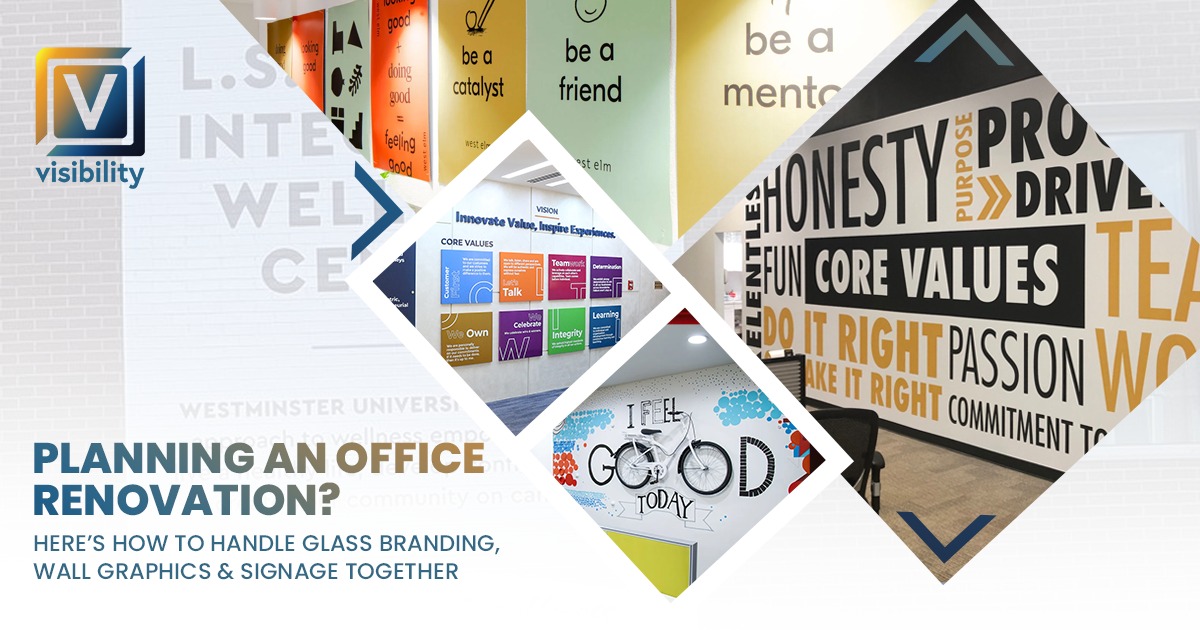
Office renovation is no longer just about upgrading furniture or repainting walls. In today’s competitive business environment, your office space plays a direct role in how clients perceive your brand and how employees experience their work environment.
If you’re planning an office renovation, one of the most overlooked yet powerful aspects is how you integrate glass branding, wall graphics, and signage.
Most businesses handle these elements separately. The result? A disconnected space that looks “updated” but not truly branded.
But when these elements are planned as one unified system, your office transforms into a functional, professional, and visually consistent environment that supports both branding and productivity.
Why Office Renovation Today Is About More Than Just Looks
Modern offices are no longer just workspaces—they are brand environments.
When a client walks into your office, they form an impression within seconds. Before any conversation begins, your space already communicates:
- Your professionalism
- Your attention to detail
- Your brand identity
- Your company culture
Similarly, employees spend hours in this environment every day. A well-designed office can improve focus, morale, and overall productivity.
That’s why renovation today is not just about aesthetics—it’s about strategic visual communication.
The Common Mistake: Treating Branding Elements Separately
Many businesses approach renovation like this:
- Glass partitions are installed for functionality
- Walls are painted or decorated later
- Signage is added at the end
This disconnected approach leads to:
- Inconsistent design
- Weak brand identity
- Missed opportunities for communication
- Higher costs due to rework
Instead of creating a cohesive experience, the office feels like a mix of unrelated elements.
To avoid this, glass branding, wall graphics, and signage must be planned together from the start.
Also Read:
Custom Wraps Provo Utah Signage Solutions
What Does a Fully Integrated Office Branding System Look Like?
A properly branded office doesn’t feel cluttered or over-designed.
It feels intentional.
Every element—glass, walls, and signage—works together to communicate the same message.
From reception to meeting rooms to workstations, the entire space should reflect:
- Consistent colors and typography
- Clear messaging
- Logical flow and navigation
- Professional finishing
This is what transforms an office from a basic workspace into a brand-driven environment.
Glass Branding: Turning Transparency into Opportunity
Glass is a common feature in modern offices—used for partitions, cabins, and meeting rooms.
But leaving glass surfaces plain is a missed opportunity.
What is Glass Branding?
Glass branding involves applying vinyl films, frosted designs, or printed graphics on glass surfaces to enhance both function and appearance.
Benefits of Glass Branding
- Privacy Without Isolation
Frosted or patterned films provide privacy while still allowing light to pass through. - Brand Visibility
Adding logos, patterns, or brand elements reinforces identity throughout the office. - Professional Appearance
Branded glass instantly elevates the look of meeting rooms and cabins. - Space Utilization
Glass surfaces become communication tools instead of unused areas.
Where to Use Glass Branding
- Meeting rooms
- Cabin partitions
- Conference areas
- Entrance glass doors
When designed correctly, glass branding balances openness and structure, creating a modern and functional office environment.
Wall Graphics: Turning Empty Walls into Brand Assets
Walls are one of the largest visual surfaces in any office—and often the most underutilized.
Plain walls don’t just look empty—they fail to communicate.
What Are Wall Graphics?
Wall graphics include vinyl prints, typography, brand visuals, and custom-designed elements applied directly to walls.
How Wall Graphics Add Value
- Reinforce Brand Identity
Logo walls, mission statements, and brand visuals remind both employees and visitors what your company stands for. - Improve Workplace Culture
Inspirational quotes, values, and team-focused messaging create a positive environment. - Enhance Aesthetics Without Major Renovation
Wall graphics provide a high-impact upgrade without structural changes. - Support Wayfinding and Information
Departments, zones, and processes can be visually defined through graphics.
Best Areas for Wall Graphics
- Reception areas (logo walls)
- Hallways (brand storytelling)
- Work zones (motivational messaging)
- Meeting rooms (functional or thematic design)
A well-designed wall doesn’t just decorate—it communicates.
Signage: The Backbone of Office Functionality
While glass branding and wall graphics enhance visual appeal, signage plays a critical functional role.
It ensures that your office is easy to navigate and understand.
Types of Office Signage
- Directional Signage
Guides visitors to different areas like meeting rooms, restrooms, or departments. - Door Signs
Identifies cabins, conference rooms, and offices. - Reception Signage
Creates a strong first impression and reinforces brand identity. - Compliance Signage
Includes safety instructions, accessibility signs, and regulatory requirements.
Why Signage Matters
Without proper signage:
- Visitors feel confused or lost
- Employees waste time navigating
- The office feels unstructured
With proper signage:
- Movement becomes smooth and intuitive
- The office feels organized and professional
- Customer experience improves instantly
Why These Three Elements Must Work Together
Glass branding, wall graphics, and signage are powerful individually—but transformative when combined.
When aligned properly, they create:
1. A Seamless Visual Experience
Everything looks connected instead of fragmented.
2. Stronger Brand Recall
Consistent visuals make your brand more memorable.
3. Better User Experience
Visitors and employees can navigate and understand the space easily.
4. Higher Perceived Value
A cohesive office design makes your business appear more established and premium.
This integrated approach ensures your renovation is not just visual—but strategic.
Planning Your Office Renovation the Right Way
To successfully combine these elements, planning is key.
Step 1: Define Your Brand Identity
Before designing anything, clarify:
- Brand colors
- Typography
- Tone and messaging
These will guide all design decisions.
Step 2: Map Your Office Layout
Identify key areas such as:
- Reception
- Workstations
- Meeting rooms
- Hallways
This helps determine where each element should be placed.
Step 3: Assign Purpose to Each Surface
Every surface should have a role:
- Glass → Privacy + branding
- Walls → Communication + aesthetics
- Signage → Navigation + clarity
Step 4: Maintain Design Consistency
Ensure that:
- Colors match across all elements
- Fonts are consistent
- Design style is uniform
Consistency is what creates a professional feel.
Step 5: Choose Durable Materials
Office branding is a long-term investment.
Use materials that:
- Resist fading
- Are easy to maintain
- Maintain quality over time
Renovating Without Disrupting Work
One major concern during office renovation is downtime.
But with proper planning, you can avoid major disruptions.
Smart Execution Strategies
- Work in phases (section by section)
- Schedule installations after working hours
- Prioritize high-impact areas first
This allows your business to continue operating while improvements are made.
What Businesses Gain from a Fully Branded Office
When glass branding, wall graphics, and signage are handled together, the results go beyond appearance.
Immediate Benefits
- Stronger first impressions
- Better client confidence
- Improved office aesthetics
Long-Term Benefits
- Enhanced brand recognition
- Better employee engagement
- More efficient workspace navigation
Your office starts working as a branding tool, not just a workplace.
When Should You Consider This Type of Renovation?
You should consider a complete branding-focused renovation if:
- Your office looks outdated
- Branding feels inconsistent
- Clients don’t get a strong impression
- Employees feel disconnected from the workspace
- You are rebranding or expanding
This approach is especially valuable for:
- Corporate offices
- Startups
- Agencies
- Service-based businesses
Also Read:
Why Your Store Isn’t Attracting Customers (And How Outdoor & Indoor Signs Can Fix It Fast)
FAQs
Should glass branding, wall graphics, and signage be designed together?
Yes. Designing them together ensures consistency, better visual impact, and cost efficiency.
Is this type of renovation expensive?
Costs vary, but even small upgrades can significantly improve brand perception and functionality.
How long does office branding renovation take?
Most projects can be completed within 1–2 weeks, depending on size and complexity.
Can renovation be done without closing the office?
Yes. With phased planning and after-hours work, disruption can be minimized.
Final Thought
An office renovation is not just about improving how your space looks—it’s about improving how it works.
When glass branding, wall graphics, and signage are planned together, your office becomes:
- Easier to navigate
- Stronger in brand identity
- More engaging for employees
- More impressive for clients
Instead of a basic workspace, you create a strategic environment that communicates, guides, and represents your business at every step.
Because in today’s business world, your office is not just where you work—it’s how your brand is experienced.
Back