
Overview
Warehouse Organization Signs
Warehouse organization signs tell people where inventory lives and which way traffic moves. Clear warehouse signage helps cut wrong turns, mispicks, and forklifts idling while someone hunts for a bay. Most warehouses build the system in three layers: aisles, locations, and zones.
Aisle Signs
Aisle signs are the markers at the end of each row that show the aisle number and what is stored there. We make them as hanging signs that read from down the row, rack-mounted signs that attach to the upright, or double-sided signs readable from both directions. Choose where people stand when they need the number. A picker walking a row and a driver approaching from the cross aisle read from different spots.
Rack and Location Labels
Each bay, each level, and each bin is labeled with a name so that a pick location will read the same each time. Barcode- or QR-ready rack labels are available when your inventory system scans locations. Each label is easily legible from the moving forklift because of large, high-contrast characters. Always label the items in the same sequence: aisle, bay, level, position.
Zone and Department Signs
Zone and department signs mark areas such as receiving, staging, returns, and cold storage. Treat them as informational signs: big, plain, and readable from a distance. Add wayfinding signs at intersections and doorways so new hires, drivers, and visitors can reach the right area without asking.
Dock and Yard Signs
The Dock and yard Signs inform drivers where to register, park, and back in, and which door is which for crews. The numbers on dock door signs must be the same on the inside as the outside. The crew is aware of what trailer to load inside. The driver searches the yard for the proper door outside.
The yard office and drivers use the same numbering system for trailer parking stalls. Trucks are directed to the dock from the gate by yard directional signs. There is a driver check-in sign that informs where to report and what to be prepared with. Make all of them large and short – a driver reads them from a cab, which is usually in a hurry.
Safety Signs for Warehouses
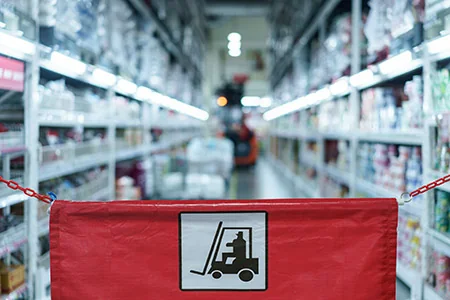
Safety signs for warehouses warn people about hazards and state rules at the point where they apply. A typical set includes forklift traffic and pedestrian walkway signs, speed limit signs, load limit signs on racks, PPE signs, and emergency exit signs. Forklift safety signs do the most work at blind corners, crossings, and doorways, where a forklift and a pedestrian are most likely to meet.
Two references come up often. OSHA 29 CFR 1910.145 covers specifications for accident prevention signs and tags. ANSI Z535 is a series of standards that sets formats for safety signs, including signal words, colors, and symbols. We can lay out safety signs in these formats.
Signs do not replace training, procedures, or a hazard assessment. Your safety manager decides which signs your site needs and where they go.
Floor Graphics and Floor Marking
Floor graphics and floor marking show people where to walk, stop, and stage. Common uses include pedestrian lanes, stop markers at intersections, and outlined staging areas. Warehouse floor signs also carry arrows, aisle numbers, and zone names that a person sees without looking up.
Paint and floor vinyl solve different problems. Paint suits long, simple lines across large areas, but every change means repainting. Floor vinyl can be printed with logos, numbers, symbols, and exact colors, and sections can be replaced when the layout changes. Surface condition and traffic levels affect how either one wears. Match floor markings to the overhead signs so a worker sees the same number or zone name above and below. For more formats, see our floor signs.
Exterior Warehouse Signs
Exterior warehouse signs help trucks and visitors find the right building from the road. Start with building signs that state the company or tenant name on the wall that faces the main approach.
Address signs matter at a warehouse because drivers often read them from a truck while looking for a turn. Use large numerals in high contrast and place them where the driver can see them early. At a business park with several tenants, monument signs list each company at the entrance. Larger facilities may also need building signs on more than one wall. Distribution center signs often combine a building number with a tenant name and an entrance label.
Materials Built for Warehouses
Warehouse signs are usually made from aluminum, rigid plastic, reflective vinyl, or magnetic material, depending on where they go. Aluminum signs hold their shape on racks, posts, and walls and suit areas where signs get bumped. For other options, see our metal signs.
Rigid plastics work for lighter indoor signs, such as zone labels on a wall. Reflective vinyl helps in dim aisles, loading areas, and yards at night, because it returns light from headlights and work lamps. Magnetic labels fit locations that change, like seasonal staging areas or rack bays that get reassigned.
Our Process
Our process runs in five steps, from a first look at your layout to installation.
- Layout review or site walk. We look at your floor plan or walk the building to see aisles, racks, docks, traffic routes, and sightlines.
- Labeling and numbering plan. We agree on one numbering logic for aisles, bays, levels, docks, and zones before anything is designed.
- Design and proof. You review a proof of sizes, wording, and placement, and approve it before production.
- Production. Signs are produced in sets so numbers, colors, and formats match across the whole building.
- Installation around operations. We schedule installation to fit your shifts, including nights and weekends.
Why Utah Warehouses Choose Visibility Signs & Graphics for Warehouse Signs
Utah warehouses choose Visibility Signs & Graphics for large-volume production, consistent numbering systems, and installation planned around live operations. A building with hundreds of locations needs signs that match in size, font, and color from the first aisle to the last. Producing them as one job helps keep the set consistent.
Installation follows your schedule, so receiving and shipping can keep moving where possible. This page covers storage, docks, and traffic. For production-line signage, see our manufacturing signs page.
Warehouse Sign FAQs
What signs does a warehouse need?
A warehouse needs aisle signs, rack and location labels, dock door numbers, forklift and pedestrian safety signs, emergency exit signs, and floor markings. Add zone signs for receiving and staging, plus exterior building and address signs for trucks. The right mix depends on your layout, operations, and your safety manager’s requirements.
How should warehouse aisles be numbered?
Number aisles in one consistent order, usually starting at the entrance or receiving dock, so numbers rise as people walk deeper. Use the same format on aisle signs, rack labels, and your inventory system. Avoid skipping numbers or reusing them in different zones, because that causes wrong turns and mispicks.
Are floor graphics durable under forklift traffic?
Floor graphics can hold up under forklift traffic when an industrial floor product is installed on a suitable, clean surface. Wear still depends on the product, the floor, and traffic levels, and busy intersections wear fastest. Tell us your floor type and traffic, and we will recommend a product.
Do you make dock door number signs?
Yes. We design, print, and install dock door numbers for the inside and outside of each door, plus trailer stall markers and yard directional signs. We match them to your numbering plan, so doors, stalls, and yard signs all follow one system.
Can you install signs at night or on weekends?
Yes, we plan installation around your operations, including nights and weekends when that keeps docks and aisles running. Share your shift schedule and busy periods during the site walk. We sequence the work by zone to limit disruption to crews and forklifts.
What signs improve forklift safety?
Signs at decision points improve forklift safety most: forklift crossing and stop signs at intersections, pedestrian walkway signs, speed limit signs, rack load limit signs, and floor markings that show lanes. Keep wording short. Signs support training and procedures but do not replace them.
Send your floor plan for a warehouse signage quote.
Mark your aisles, docks, and safety zones on the plan, or tell us what needs labeling. We’ll lay out the full sign schedule and quote it, with installs timed around your shifts so operations keep moving.