


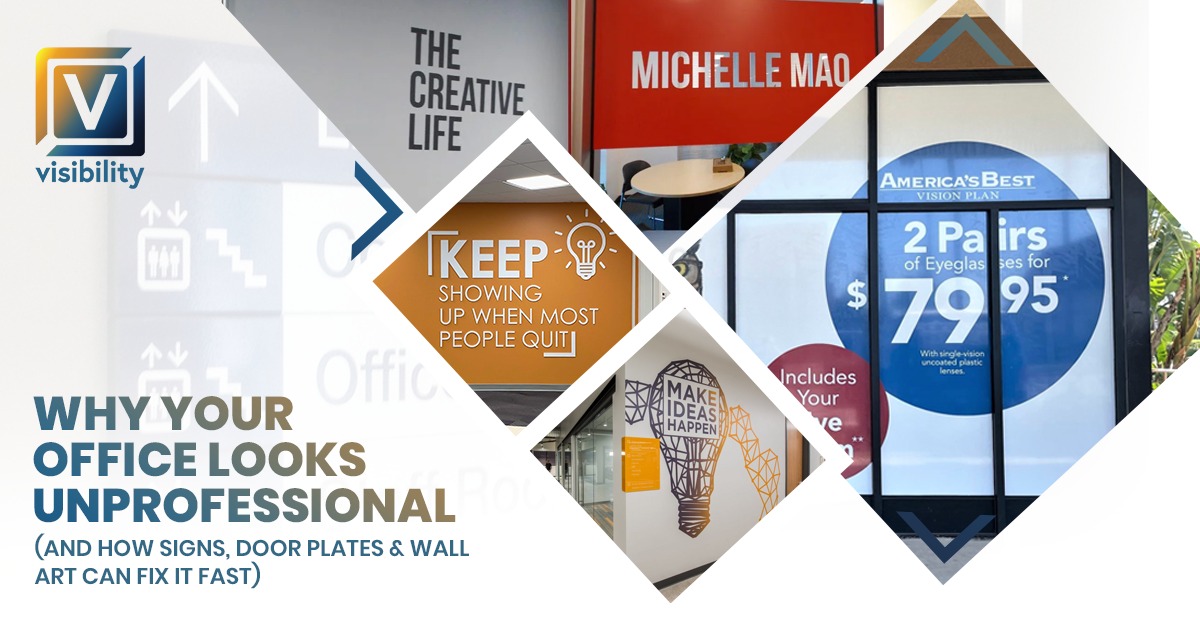
Why Your Office Looks Unprofessional (And How Signs, Door Plates & Wall Art Can Fix It Fast)
Walk into any office, and within seconds, you form an impression.
- Before anyone speaks.
- Before any presentation begins.
- Before you even sit down.
The space itself communicates everything.
If your office feels unorganized, outdated, or visually inconsistent, it quietly sends the wrong message to clients, visitors, and even your own team. They may not say it—but they feel it.
And that feeling affects trust.
The surprising part? In most cases, this problem has nothing to do with expensive renovations or redesigns.
It comes down to how effectively your office uses signage, door plates, and wall art to communicate professionalism.
First Impressions Are Visual—And They Happen Instantly
The moment someone enters your office, their brain starts processing visual signals.
They are not analyzing your business model or comparing your services. Instead, they are subconsciously asking:
- Does this place look organized?
- Is it easy to understand where to go?
- Does it feel modern and professional?
These judgments happen within seconds.
If your office lacks structure—no clear signage, blank walls, inconsistent labels—it creates hesitation. And hesitation weakens confidence.
On the other hand, a well-branded office instantly builds trust because everything feels intentional.
This is why visual presentation is not just design—it’s your first layer of communication.
Also Read:
From Empty Space to Strong Brand: How Complete Signage Transforms Utah Retail Stores
The Hidden Signs Your Office Looks Unprofessional
Many businesses don’t realize that small visual gaps are creating a negative impression.
Let’s break down the most common issues and why they matter.
1. No Clear Signage
When visitors enter your office and don’t know where to go, the experience starts with confusion.
They may hesitate at the entrance, look around awkwardly, or ask for directions.
This immediately creates friction.
Clear signage eliminates this problem by guiding visitors naturally. It makes your office feel structured, organized, and easy to navigate.
Without it, even a well-designed office can feel chaotic.
2. Generic or Missing Door Plates
Door plates might seem like a minor detail, but they play a critical role in office organization.
If some doors have printed paper labels, others have outdated plates, and some have nothing at all—it creates inconsistency.
This inconsistency signals lack of attention to detail.
Professional door plates, designed with consistent fonts, materials, and layout, instantly improve how your office is perceived. They create clarity and reinforce a polished look.
3. Empty or Unplanned Walls
Walls are one of the largest visual surfaces in your office.
When they are empty, the space feels incomplete.
When they are cluttered, the space feels overwhelming.
Both scenarios reduce professionalism.
Unplanned walls fail to communicate anything about your brand. They don’t guide, inspire, or inform.
Strategically designed walls, however, can turn your office into a storytelling environment.
4. Inconsistent Branding
If your signage uses one font, your door plates use another, and your wall visuals follow a different style, the entire office feels disconnected.
Even if each element looks fine individually, together they create confusion.
Consistency is what makes a space feel professional.
When everything aligns—colors, typography, tone—it builds a strong and unified brand identity.
5. Poor Navigation Flow
An office without clear visual guidance forces people to rely on verbal directions.
Visitors constantly ask questions like:
- “Where is the meeting room?”
- “Where should I go?”
This creates inefficiency and discomfort.
A well-designed office uses signage and visual cues to guide movement naturally, reducing confusion and improving overall experience.
Why Visual Branding Matters More Than You Think
Your office is not just a workspace—it’s a reflection of your business.
Every visual element contributes to how your brand is perceived.
- Clean, consistent visuals → Professional and reliable
- Cluttered or missing visuals → Disorganized and unclear
People trust what they can understand easily.
If your office communicates clearly, clients feel confident. If it doesn’t, they hesitate—even if your services are excellent.
This is why branding inside your office is just as important as branding outside.
How Signage Instantly Improves Professionalism
Signage is the foundation of a well-structured office.
It creates order, clarity, and direction.
What Office Signage Includes
Office signage is not limited to one type. It includes:
- Reception signs (your first impression)
- Directional signs (guiding movement)
- Department signs (defining spaces)
- Meeting room identifiers
- Safety and compliance signs
Each of these plays a specific role in making your office functional.
What Good Signage Achieves
Clear Navigation
Visitors can move confidently without asking for help.
Structured Environment
The office feels organized and easy to understand.
Professional Image
Clean and consistent signage reflects attention to detail.
Operational Efficiency
Employees and visitors save time and avoid confusion.
Signage works silently—but its impact is immediate and powerful.
Also Read:
From Empty Walls to Fully Branded Store: Complete Signage Solutions for Retail Businesses in Utah
Door Plates: Small Details That Make a Big Difference
Door plates are often underestimated because of their size.
But in reality, they are one of the most visible elements in an office.
Every cabin, meeting room, or office space relies on door plates for identification.
Why Door Plates Matter
Clarity
They clearly indicate who sits where and what each space represents.
Consistency
Uniform design across all doors creates a cohesive environment.
Professional Appeal
High-quality materials elevate the overall look of the office.
Flexibility
Modern door plates can be easily updated when roles or teams change.
Best Practices for Door Plates
- Use the same font and color scheme across all plates
- Choose materials like acrylic, metal, or engraved finishes
- Ensure readability from a distance
- Align design with overall office branding
These small details significantly influence how your office is perceived.
Wall Art: Turning Empty Space into Brand Expression
Walls are not just structural elements—they are communication tools.
When used correctly, they can tell your brand story, inspire employees, and impress clients.
Types of Office Wall Art
- Logo walls for brand identity
- Mission and vision displays
- Inspirational quotes for team motivation
- Custom graphics and patterns
- Timeline or storytelling walls
How Wall Art Improves Your Office
Brand Reinforcement
Your identity becomes visible and memorable.
Visual Appeal
The office feels modern, engaging, and well-designed.
Employee Experience
A visually stimulating environment boosts morale.
Client Impression
Visitors remember your space long after they leave.
Wall art transforms your office from a plain environment into a branded experience.
Why These Three Elements Must Work Together
Signage, door plates, and wall art should never be treated as separate upgrades.
When designed independently, they often clash.
When designed together, they create harmony.
What Integration Achieves
Visual Consistency
Everything looks aligned and intentional.
Stronger Branding
Your office communicates one clear identity.
Better User Experience
Visitors navigate effortlessly.
Higher Perceived Value
Your business feels more established and professional.
This is what turns an office into a complete brand environment.
Quick Fixes That Deliver Fast Results
You don’t need a full renovation to see improvement.
Simple upgrades can create immediate impact:
- Install a reception logo sign
- Add directional signage
- Replace outdated door plates
- Create a feature wall
- Remove clutter and align design
These changes are fast, affordable, and highly effective.
Planning It the Right Way
To achieve the best results, follow a structured approach:
Define Your Brand Style
Set colors, fonts, and tone.
Audit Your Current Office
Identify gaps and inconsistencies.
Prioritize Key Areas
Focus on reception and high-traffic zones.
Maintain Consistency
Ensure all elements follow the same design system.
Invest in Quality Materials
Durability ensures long-term impact.
What Changes After the Upgrade
Once your office is properly branded:
- Clients feel more confident
- Visitors navigate easily
- Employees feel more connected
- Your business appears more professional
Your office becomes a silent marketing tool.
Final Thought
An unprofessional office is not about size or budget.
It’s about how clearly your space communicates.
When signage, door plates, and wall art are used strategically, your office transforms into a structured, branded, and professional environment.
Because in business, perception is powerful.
And your office is where that perception begins.
Back