


The Rise Of Aluminum Signs In Northern And Central Utah: Trends And Benefits
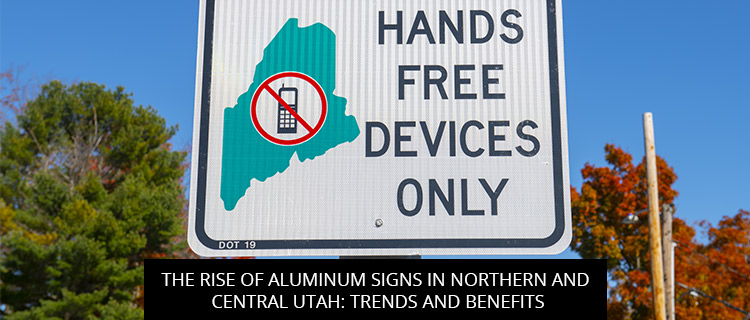
About three years ago, a property management company in Sandy came to us with a problem I’ve seen more times than I can count. They had wooden monument-style signs at six of their apartment complexes across the Salt Lake Valley. Every single one was falling apart. Utah’s freeze-thaw cycles had cracked the wood. Summer UV had bleached the paint. One sign had warped so badly the tenant panel inserts wouldn’t sit straight anymore. They were spending thousands every year patching, repainting, and replacing components — and the signs still looked rough.
We replaced all six with aluminum signs. Custom-fabricated aluminum panels on aluminum post and panel frames with routed-out text and reflective vinyl graphics. That was three years ago. I drove past two of those properties last month. They look exactly the same as the day we installed them. No fading. No warping. No cracking. Zero maintenance calls.
That’s aluminum signs in a nutshell. They don’t just look good on day one — they look good on day one thousand. And in a state like Utah, where the weather actively tries to destroy everything you put outdoors, that kind of durability isn’t a nice bonus. It’s essential.
At Visibility Signs & Graphics, we’ve watched aluminum signs go from being one option among many to becoming the default material choice for a huge range of business signage applications across Northern and Central Utah. Here’s why that shift has happened and what it means for your business.
What Makes Aluminum Different From Every Other Sign Material
Before I get into the specific benefits, it helps to understand what we’re actually working with. When we talk about aluminum signs in the commercial signage world, we’re usually referring to one of three material formats:
Flat aluminum sheet — solid aluminum panels in various thicknesses (typically .040″ to .080″ for sign applications). These are used for everything from address signs and parking lot signs to wall-mounted identification panels. They’re lightweight, rigid, and take vinyl graphics and direct printing beautifully.
Aluminum composite material (ACM) — this is the material most people know by brand names like Dibond. It’s a sandwich construction: two thin aluminum skins bonded to a solid polyethylene core. ACM panels are incredibly rigid and flat while being lighter than solid aluminum of equivalent thickness. They’re the material of choice for larger flat-panel signs, building facades, and high-end commercial applications. Our dibond signs are among the most popular products we offer for exactly this reason.
Aluminum extrusions and fabricated aluminum — these are custom-shaped aluminum components used in channel letter construction, cabinet sign frames, post and panel sign structures, and monument sign frames. Aluminum can be bent, welded, routed, and finished in virtually any configuration, making it the backbone of most commercial sign fabrication.
Each format has its strengths, and we frequently use combinations of all three within a single signage project. Understanding the material options helps you make smarter decisions about what’s right for your specific application — and that’s a conversation we have with every client before any design work begins.
Also Read:
How to Transform Your Office Interior Without Renovation Using Signs, Glass Stickers & Wall Designs
Durability That Actually Survives Utah Weather
I need to be blunt about this because it’s the number one reason businesses in Northern and Central Utah should be choosing aluminum over most alternatives. Our climate is brutal on outdoor signage.
Consider what your sign faces over the course of a single year in the Wasatch Front corridor:
- Summer temperatures regularly exceeding 100°F with intense, direct UV radiation at our altitude
- Winter lows well below freezing with snow loads, ice accumulation, and road salt spray
- Spring windstorms that can gust above 60 mph along the benches
- Dramatic temperature swings of 40-50 degrees within a single 24-hour period during transitional seasons
- Low humidity that dries out and cracks organic materials faster than more humid climates
Wood signs crack, warp, split, and rot. PVC and certain plastics become brittle in cold and yellow in UV. Cheap composite materials delaminate when moisture infiltrates edges. Steel rusts unless it’s meticulously finished and maintained.
Aluminum does none of those things. It doesn’t rust — it forms a microscopic oxide layer that actually protects the surface from further corrosion. It doesn’t warp or crack under temperature swings. It holds paint and vinyl adhesion reliably across the full temperature range we experience in Utah. And it’s naturally resistant to UV degradation, meaning the substrate itself won’t break down even under years of direct sun exposure.
A dental office in Provo had a PVC sign panel that started yellowing and becoming chalky after just two years of sun exposure. We replaced it with a painted aluminum panel with vinyl graphics. Five years later, it still looks factory-fresh. The material simply handles our environment better than the alternatives.
That’s not marketing fluff. That’s metallurgy meeting meteorology, and aluminum wins every time in this region.
Lightweight but Rigid — An Engineering Sweet Spot
Here’s something that matters enormously in practical signage applications but rarely gets discussed in marketing materials: weight-to-rigidity ratio.
A sign needs to be rigid enough to resist wind deflection, maintain its flat profile without bowing, and hold its shape over years of temperature cycling. But it also needs to be light enough to mount safely on buildings, install on posts without massive structural supports, and transport without specialized equipment.
Aluminum hits this sweet spot better than any other common sign material. A standard .080″ aluminum panel is rigid enough for most wall-mounted applications while being light enough for a two-person crew to handle easily. ACM panels like Dibond take this even further — they’re stiffer than solid aluminum of the same weight because the composite construction creates a structural advantage.
This weight advantage has real cost implications too. Lighter signs require less robust mounting hardware, simpler structural supports, and less labor during installation. For post and panel signs, aluminum panels on aluminum posts can be installed in a fraction of the time it takes to set a heavy wooden or masonry sign. For building-mounted signs, lighter panels mean less stress on the building facade and fewer structural concerns for property managers.
A real estate development group we work with in Lehi and American Fork standardized all their property management signs on aluminum post and panel systems specifically because the installation efficiency saved them money across dozens of locations. When you’re signing thirty properties, that per-unit installation savings adds up fast.
The Aesthetic Range Is Wider Than Most People Realize
I think one of the biggest misconceptions about aluminum signs is that they all look the same — flat, silver, industrial. That might have been somewhat true twenty years ago. In 2026, the aesthetic possibilities with aluminum are genuinely enormous.
Paint finishes: Aluminum accepts powder coating and wet paint beautifully, and modern paint systems offer durability measured in decades. You can match any Pantone color, any brand palette, any aesthetic mood. Matte, satin, semi-gloss, high-gloss — whatever your brand requires. A matte black aluminum panel with white vinyl text looks sleek and modern. A forest green panel with gold lettering looks classic and established. Same material, completely different personality.
Brushed and textured finishes: Rather than painting, the aluminum surface itself can be finished to create visual texture. Brushed aluminum has a directional grain that catches light beautifully and adds a premium, industrial-chic quality. This finish is extremely popular for metal signs used in lobby displays, professional office identification, and high-end retail environments.
Routed and dimensional effects: CNC routing allows us to cut aluminum into virtually any shape, create raised or recessed lettering directly in the panel surface, and fabricate custom dimensional elements that add depth and shadow. A routed aluminum address sign with painted recessed numbers is a subtle, elegant detail that elevates any building facade.
Mixed material combinations: Aluminum pairs beautifully with other materials. Aluminum letters mounted on a natural stone monument. An aluminum panel floating on standoffs in front of a wood-clad wall. Brushed aluminum trim framing an illuminated acrylic panel. These combinations create visual richness that single-material signs can’t achieve.
A law firm in Sandy wanted signage that communicated “established, serious, trustworthy” without being stuffy. We fabricated brushed aluminum dimensional letters mounted on a dark charcoal painted aluminum backer panel. The result was clean, modern, and undeniably professional. It didn’t look like what most people picture when they hear “aluminum sign” — and that’s exactly the point.
Cost Efficiency Over the Full Lifecycle
Let me reframe how most business owners think about sign costs, because the initial price tag is only a fraction of the real number.
The true cost of a sign is the purchase price plus all maintenance, repair, and replacement costs over the sign’s useful life. When you calculate it that way, aluminum signs are among the most cost-effective options available — even though their upfront cost may be slightly higher than cheaper alternatives like corrugated plastic, foam PVC, or untreated wood.
Here’s why the math works:
Minimal maintenance. Aluminum signs require almost no upkeep. An occasional wash with mild soap and water keeps them looking clean. There’s no repainting schedule, no sealing treatment, no rust prevention regimen. Compare that to wood signs that need refinishing every two to three years or steel signs that need rust treatment and touch-up painting.
No premature replacement. Because aluminum resists UV degradation, corrosion, warping, and cracking, it doesn’t need to be replaced on a shortened timeline the way budget materials do. A corrugated plastic sign might cost a quarter of what an aluminum sign costs upfront, but when you’re replacing it every 12-18 months because it’s faded, cracked, or blown apart in a windstorm, the real cost per year far exceeds the aluminum option.
Reduced sign repair needs. When damage does occur — impact from a vehicle, vandalism, extreme weather events — aluminum is often repairable rather than requiring full replacement. A dented aluminum panel can sometimes be straightened, repainted, and regraphicked for a fraction of replacement cost. Our sign repair services handle this regularly for clients who want to extend the life of their existing aluminum signage.
Resale value protection. For businesses that lease their space, maintaining the property’s appearance matters. Landlords and property managers prefer tenants whose signage enhances the building rather than degrading it. Aluminum signs maintain their appearance for years, which protects the building’s curb appeal and, by extension, property values.
One of our clients — a chain of quick-service restaurants with locations in Orem, Provo, and Murray — did a cost analysis comparing their wooden signs (which they’d been replacing every four to five years) against aluminum replacements. Over a ten-year projection, the aluminum signs saved them roughly 40% in total signage costs despite the higher initial investment. They’ve since standardized on aluminum for all new locations.
Sustainability That Actually Means Something
I’m cautious about making environmental claims because too many companies throw around “green” language without substance behind it. With aluminum, the sustainability story is genuinely strong.
Aluminum is one of the most recycled materials on the planet. Industry data consistently shows that roughly 75% of all aluminum ever produced is still in use today. When an aluminum sign eventually reaches end-of-life — which, given its durability, might be a decade or more down the road — the material can be fully recycled into new aluminum products without any loss of quality. That’s a true closed-loop cycle that very few sign materials can claim.
The recycling process for aluminum also uses approximately 95% less energy than producing new aluminum from raw ore. So even the recycling step has a dramatically reduced environmental footprint.
Beyond recyclability, the longevity factor itself is an environmental benefit. A sign that lasts ten years has one-fifth the manufacturing and disposal impact of a sign that needs replacement every two years. Less waste, less production energy, fewer raw materials consumed over time.
For businesses in Northern and Central Utah — where environmental consciousness is increasingly important to consumers and to the communities themselves — choosing aluminum signs aligns your physical branding with sustainable values. It’s not greenwashing. It’s a genuinely better material choice from an environmental standpoint.
Real-World Applications Across Northern and Central Utah
Let me walk through some specific applications where aluminum signs are making the biggest impact for businesses across the region:
Real estate signs. The real estate market across the Wasatch Front moves fast, and agents need signs that can be installed quickly, withstand the elements through every season, and look professional at every listing. Aluminum real estate signs on metal frames have become the industry standard because they’re light enough for agents to transport and install themselves, durable enough to leave on-site for months without deterioration, and professional enough to reflect well on the agent’s brand.
Property management signs. Apartment complexes, HOAs, commercial properties, and office parks across Salt Lake City, Sandy, Draper, and Utah County rely heavily on aluminum property management signs for community identification, directional information, policy postings, and leasing promotions. The combination of durability and easy graphic updates (vinyl overlays can be changed without replacing the aluminum substrate) makes them ideal for properties that need to update messaging periodically.
Address signs. Every commercial building needs clear address identification, and aluminum address signs offer a clean, permanent solution that meets municipal visibility requirements while looking intentional and polished. We fabricate address signs in a range of styles — from simple routed-number panels to dimensional aluminum numbers on standoffs.
Parking and directional signs. Aluminum panels on aluminum posts are the standard for outdoor directional signage, parking lot signs, and property navigation. They resist the road salt and vehicle exhaust exposure that’s constant in parking environments, and they maintain legibility far longer than printed plastic alternatives.
Construction and development signs. Builders and developers across Lehi, American Fork, Saratoga Springs, and other growth corridors use large-format aluminum signs to announce upcoming projects, display site plans, and promote pre-sales. These signs need to look premium — they’re selling a vision — and they need to survive an 18-to-24-month construction timeline exposed to every weather condition Utah can produce.
Also Read:
Complete Office Branding Guide: From Reception Signs to Washroom Icons & Window Graphics
Choosing the Right Sign Partner for Aluminum Fabrication
Not all aluminum signs are created equal, and the difference between a sign that lasts a decade and one that disappoints within two years often comes down to the fabrication and installation quality.
Material gauge matters. Vinyl quality matters. Print resolution and lamination matter. Mounting hardware, sealant, and fastener choices matter. And installation technique — proper anchoring, leveling, weatherproofing of mounting points — matters enormously.
At Visibility Signs & Graphics, we control the entire process from design through fabrication and installation. We source commercial-grade aluminum and ACM stock from reputable suppliers. We use premium vinyl systems with matched laminates rated for outdoor durability. We fabricate in-house with precision CNC equipment. And we install with our own trained crews who understand the structural and aesthetic requirements of every mounting scenario.
We serve businesses across the full Northern and Central Utah corridor — from Provo, Orem, and Springville through Lehi, American Fork, Salt Lake City, Sandy, Draper, Park City, Layton, Bountiful, and beyond. Whether you need a single aluminum address sign or a multi-site rollout of property identification panels, we have the capacity and experience to deliver.
Your Sign Material Is a Business Decision, Not Just a Design Choice
The material your sign is made from affects how long it lasts, how much it costs over time, how it performs in our climate, how it looks to your customers, and what it communicates about your brand’s commitment to quality. That makes it a business decision — one that pays dividends for years when made wisely.
Aluminum signs have earned their place at the top of the commercial signage material hierarchy in Northern and Central Utah because they deliver on every metric that matters: durability, aesthetics, versatility, cost efficiency, and sustainability. The businesses that have made the switch aren’t going back, and the ones still holding onto deteriorating signs in lesser materials are paying for that choice in maintenance costs and missed impressions every single day.
If your current signage is showing its age — fading, cracking, warping, or just looking tired — it might be time to consider what aluminum can do for your business. Reach out to our team at Visibility Signs & Graphics and let’s talk about building something that lasts.
Back