


Window Lettering for Utah Businesses: The Complete Guide to Types, Uses, and Why It Works
Why Window Lettering Is One of the Smartest Investments a Utah Business Can Make
Walk down any commercial street in Salt Lake City, Provo, Orem, or Sandy, and you’ll notice something the most successful businesses have in common — their windows say something. Not just with graphics or photos, but with lettering. Clean, professional, intentional window lettering that tells you who they are, what they offer, and why you should walk through the door.
Window lettering isn’t a new idea, but it’s having a significant resurgence across Northern and Central Utah as business owners recognize that their storefront windows are some of the most valuable and most underused advertising real estate they own. Unlike digital ads that disappear when the budget runs out, or flyers that end up in the trash, window lettering works around the clock — communicating your brand to every person who walks, drives, or bikes past your location.
This guide covers everything a Utah business owner needs to know about window lettering: what it is, the types available, which businesses benefit most, how to plan a design, and what to look for in a sign company. If you’ve been on the fence about window lettering, by the end of this article, you’ll have a clear picture of whether it’s right for your business — and how to get started.
What Is Window Lettering?
Window lettering refers to text, numbers, or alphanumeric content applied directly to glass surfaces using vinyl, paint, or metallic materials. Unlike window graphics — which are primarily image-based — window lettering focuses on text: your business name, tagline, phone number, hours of operation, website, services offered, or any message you want visible from the street.
It’s applied to exterior or interior-facing glass, meaning it can be read from outside or inside, depending on your layout. For storefronts, exterior-facing lettering is most common. For office environments, interior-facing lettering on glass partitions and conference room doors is equally popular.
The key appeal of window lettering is its combination of simplicity, professionalism, and affordability. It’s one of the few signage solutions that works for a solo-practitioner law office in Provo just as effectively as it does for a multi-location retail chain across the Wasatch Front.
Types of Window Lettering: Which One Is Right for Your Business?
Not all window lettering is the same. The material, finish, and application method you choose will affect the look, durability, and message of your signage. Here’s a breakdown of the main options:
Vinyl Cut Lettering
This is the most widely used type of window lettering. Individual letters and characters are precision-cut from rolls of colored vinyl film using a computer-controlled cutting machine, then applied to the glass surface. The result is crisp, clean text in virtually any font, size, or color.
Vinyl cut lettering is ideal for: business names, taglines, phone numbers, hours of operation, and website URLs. It’s low-cost, quick to produce, and easy to update when your information changes. Most quality vinyl used by professional sign companies carries a 5–7 year outdoor durability rating, making it a reliable long-term choice for storefronts across Utah’s range of climates — from the heat of St. George summers to the harsh winters of Park City.
Printed Vinyl Lettering
For businesses that want multi-color text, gradient effects, or lettering combined with brand-specific design elements, digitally printed vinyl offers greater flexibility. This process prints onto vinyl using high-resolution wide-format printers, allowing precise color matching to brand standards.
Printed vinyl lettering is ideal for: franchises and businesses with strict brand guidelines, businesses that want colorful or stylized lettering, and retail environments where presentation is a competitive differentiator.
Metallic & Gilded Lettering
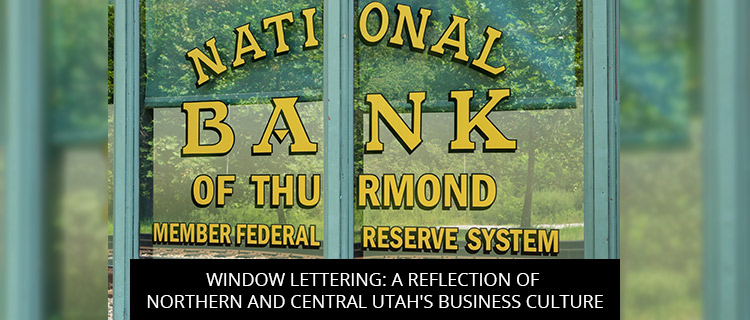
For law firms, financial advisors, medical practices, and professional offices, metallic lettering projects authority and permanence. Options include gold-leaf style vinyl, brushed silver, chrome finishes, and genuine brass or stainless steel applied letters.
This type of lettering reads as high-end and established — particularly effective in corporate corridors, professional building lobbies, and office suites where first impressions carry significant weight.
Frosted or Etched-Look Vinyl Lettering
Frosted vinyl that mimics sandblasted or acid-etched glass is a popular choice for businesses that want privacy alongside branding. It transmits light while obscuring direct views, making it perfect for conference rooms, medical exam rooms, therapy offices, and any space where privacy matters without sacrificing a modern aesthetic.
Text applied in frosted vinyl creates an upscale, architectural look that elevates interior spaces significantly — at a fraction of the cost of actual glass etching.
Temporary & Promotional Lettering
Short-term vinyl lettering is used for grand openings, seasonal promotions, clearance events, and limited-time announcements. It adheres securely but removes cleanly without leaving residue, making it the go-to choice for businesses that rotate their window messaging regularly.
Retailers in downtown Provo and Salt Lake City use this type frequently to keep their storefront messaging fresh and relevant throughout the year.
Which Utah Businesses Benefit Most from Window Lettering?
The short answer is nearly every business with a customer-facing glass surface. But here are the industries where window lettering consistently delivers the strongest ROI:
Retail Stores’ window lettering communicates your store name, hours, and current promotions to foot traffic before they ever open the door. In high-pedestrian corridors like Center Street in Provo or State Street in Salt Lake City, that first-glance communication is often what converts a casual passerby into a customer.
Restaurants, Cafés, and Bars Menu items, price points, daily specials, “open” or “closed” indicators, and Wi-Fi passwords — restaurants use window lettering for both marketing and practical communication. A clearly lettered storefront also signals to first-time visitors that the business is active, organized, and welcoming.
Medical, Dental, and Therapy Offices. Healthcare providers use window lettering to display practice names, accepted insurance carriers, and office hours. Frosted lettering on interior glass partitions creates HIPAA-friendly privacy in waiting areas and consultation rooms without making spaces feel closed off.
Law Firms and Financial Professionals The classic metallic or gold-leaf window lettering on a law office door communicates stability and credibility in a way few other signage types can match. It’s a visual shorthand for “we’ve been here, we know what we’re doing.”
Hair Salons, Spas, and Wellness Studios. These businesses thrive on atmosphere and aesthetics. Window lettering — particularly when paired with complementary window graphics — reinforces the brand personality from the curb. A clean, stylishly lettered window communicates the experience inside before customers even open the door.
Auto Dealerships and Service Centers Hours, service specials, financing offers, and brand identifiers are all commonly displayed using window lettering on showroom and service bay glass.
Real Estate Offices Professional lettering displaying agent names, phone numbers, and brokerage branding on office windows builds local name recognition over time — particularly important in competitive markets like the Wasatch Front.
Corporate Offices and Co-working Spaces. Interior glass walls and conference room doors lettered with room names, suite numbers, and company branding make professional office environments feel cohesive and navigated easily.
The Local Angle: Why Window Lettering Resonates in Utah’s Business Culture
Northern and Central Utah have a distinct business culture — community-oriented, entrepreneurially active, and visually expressive. Cities like Salt Lake City, Provo, Orem, Lehi, and Sandy have seen significant commercial growth over the past decade, with new business openings creating an increasingly competitive retail and professional services landscape.
In that environment, standing out at street level matters. Utah consumers tend to support local businesses, but local businesses have to signal their presence clearly and professionally to earn that support. Window lettering is a direct expression of that — it says “we’re here, we’re established, and we take our business seriously.”
There’s also a practical climate consideration. Utah’s intense UV exposure means that signage materials need to perform under significant sun exposure. Professionally sourced vinyl from a reputable sign company — one that specifies outdoor-rated, UV-stabilized films — will hold its color and adhesion through years of exposure. Cheaper materials, or DIY applications, frequently fade, bubble, or peel within a season or two. Businesses in sun-intensive areas like St. George, Cedar City, or west-facing storefronts along major commercial corridors in the Salt Lake Valley need to pay particular attention to material specification.
Designing Effective Window Lettering: What Actually Works
Good window lettering design follows a few consistent principles regardless of business type:
Legibility from a Distance Comes First. Window lettering needs to be readable from the sidewalk, the parking lot, and passing vehicles, depending on your location. Font choice matters enormously. Decorative or script fonts may look beautiful up close, but become unreadable from 30 feet away. Bold, clean sans-serif or serif fonts consistently outperform stylized alternatives in real-world readability tests.
Less Text, More Impact. The most effective window lettering is concise. Your business name, one supporting line (tagline, service descriptor, or phone number), and hours — that’s usually the right amount. Crowded windows with long blocks of text overwhelm rather than inform.
Contrast Is Non-Negotiable. White lettering on a light-colored interior wall reads poorly from outside. Dark lettering on dark-tinted glass has the same problem. Professional sign companies assess your specific glass type, interior colors, and lighting conditions before specifying vinyl colors — this step alone separates quality work from DIY results.
Placement Follows Sight Lines The natural eye level for pedestrians is roughly 5–6 feet from the ground. For drivers, it’s slightly higher. Effective window lettering is placed where it intercepts those sight lines rather than at the very top or bottom of a window pane, where it’s frequently overlooked.
Brand Consistency Your window lettering should use the same fonts, colors, and visual language as your other branded materials — your logo, business cards, website, and interior signage. Inconsistency signals a lack of attention to detail to customers who are paying attention.
ADA Compliance and Window Lettering
For businesses with public-facing spaces in Utah, ADA (Americans with Disabilities Act) compliance is an important consideration for interior signage, including door lettering. ADA-compliant signs require specific character height minimums, finish and contrast requirements, and in some cases, the inclusion of Grade 2 Braille.
This typically applies to permanent room identification signs — conference rooms, restrooms, offices — rather than promotional window lettering. However, it’s worth discussing with your sign company to ensure any interior door or partition lettering meets applicable requirements. Visibility Signs & Graphics designs and produces ADA-compliant lettering and can advise on which applications require compliance and which do not.
Also Read:
Complete Office Branding Guide: From Reception Signs to Washroom Icons & Window Graphics
How the Window Lettering Process Works with a Professional Sign Company
For businesses considering their first window lettering project, here’s a realistic overview of what the process looks like when working with a professional:
Consultation and Site Assessment: A good sign company starts by understanding your goals, reviewing your location, and assessing the glass surfaces involved. This includes noting glass type (clear, tinted, frosted), surface condition, and any existing signage that needs to be coordinated or removed.
Design and Proof. Based on your brand assets and the site assessment, the design team creates a layout. You’ll receive a digital proof showing the lettering to scale on your actual storefront before anything is produced. Revisions are made until you’re satisfied.
Material Selection and Production The appropriate vinyl type, color, and finish are specified based on the application (interior vs. exterior, long-term vs. temporary, standard vs. metallic). Production typically takes 1–3 business days for most window lettering projects.
Professional Installation The installation team cleans the glass, applies the lettering with precise placement and alignment, and removes any air bubbles or imperfections. Most window lettering installations are completed in a single visit and don’t require business closure.
Aftercare Guidance: A professional installer will advise you on care and cleaning — typically just avoiding abrasive cleaners and waiting 24–48 hours after installation before washing the windows.
Common Window Lettering Mistakes to Avoid
Having worked with hundreds of businesses across Northern and Central Utah, we’ve seen the same mistakes repeated. Here’s what to avoid:
Using a font that looks good on a computer but fails in the real world. Always proof your font choice in the actual scale and viewing distance it will be seen from, not just on screen.
Overloading the window with too many messages. Pick one primary message and support it with minimal secondary text. More isn’t more in window lettering.
Skipping the installation and applying it yourself. DIY application of commercial vinyl almost always results in bubbles, misalignment, and premature failure — especially in Utah’s temperature extremes. Professional installation is worth the cost.
Choosing color based on preference rather than visibility. What looks attractive in a color swatch may disappear against your interior background or in certain lighting conditions. Always get a site-specific recommendation.
Not planning for future updates. If your phone number, hours, or services change frequently, plan for that from the start by choosing a layout that allows partial updates without redoing the entire application.
Why Visibility Signs & Graphics for Window Lettering in Utah?
Visibility Signs & Graphics has been designing, producing, and installing window lettering for businesses across Northern and Central Utah for years. From solo practitioners in Orem to multi-location retailers in the Salt Lake Valley, our work spans virtually every industry and business type in the region.
What we bring to every project: in-house design, commercial-grade materials, certified installation, and a single point of contact from consultation through completion. We’re not a broker or a national chain — we’re a local sign company with deep knowledge of Utah’s business landscape, climate conditions, and what actually works on the streets of Provo, Salt Lake City, Lehi, Clearfield, and Park City.
We also handle everything your storefront might need beyond window lettering — from window graphics and vinyl lettering to storefront signs, lobby signage, and ADA signs — so your signage tells a consistent story inside and out.
Ready to Letter Your Windows? Here’s Your Next Step
If your windows are blank, outdated, or not performing the job they should, now is a good time to change that. Window lettering is one of the highest-value, lowest-disruption signage investments available to Utah businesses — and the turnaround from consultation to installation is typically fast.
Call us at (801) 212-9987 or schedule a free consultation, and one of our signage experts will walk you through your options, review your space, and help you design lettering that works for your business, your budget, and your brand.
Back