
How to Transform Your Office Interior Without Renovation Using Signs, Glass Stickers & Wall Designs
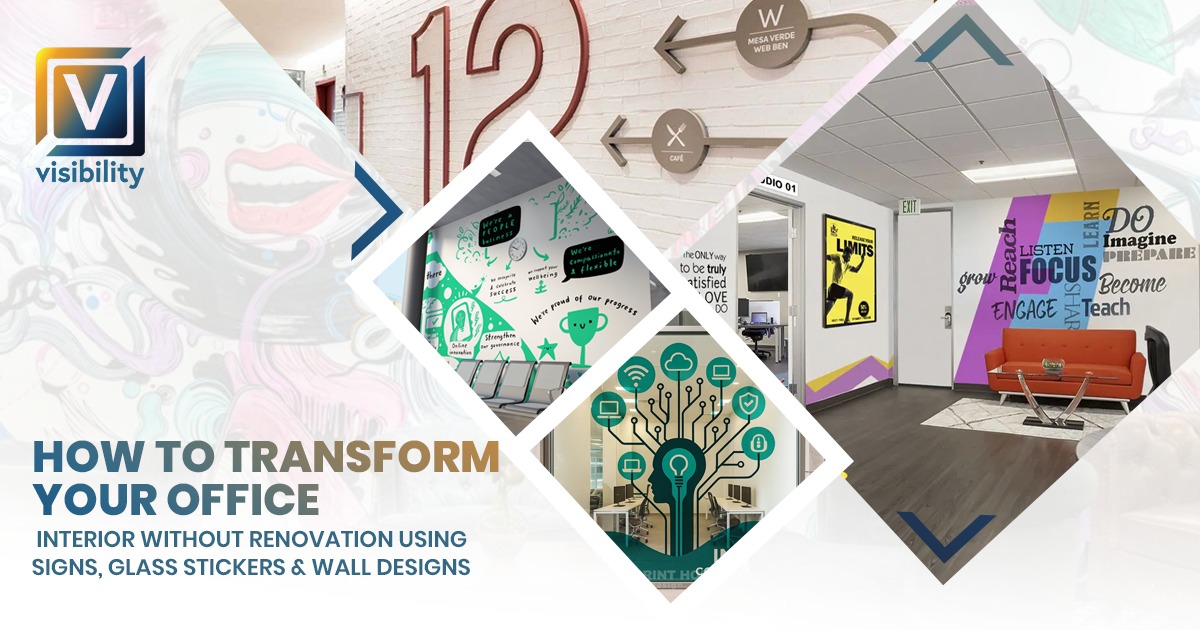
Not every office transformation requires construction, demolition, or a heavy renovation budget.
In fact, many modern workplaces are upgrading their interiors without changing a single wall.
If your office feels outdated, empty, or disconnected from your brand, the solution may not be renovation—it may be visual branding.
Using the right combination of signage, glass stickers, and wall designs, you can completely transform how your office looks, feels, and functions—quickly, affordably, and with minimal disruption.
Why Traditional Renovation Is No Longer the Only Option
Office renovation used to mean tearing down walls, repainting everything, and investing significant time and money.
But today, businesses are shifting toward smarter, faster solutions.
Why?
Because renovation comes with challenges:
- High costs
- Long downtime
- Operational disruption
- Complex planning
For many businesses, especially growing companies, shutting down operations for weeks is not practical.
That’s where non-invasive upgrades like signage and graphics come in.
They offer a way to refresh your space without interrupting your workflow.
The Real Problem: Your Office Lacks Visual Identity
Most offices don’t actually need structural changes—they need visual clarity and branding.
Common issues include:
- Plain or empty walls
- No clear signage or navigation
- Unused glass surfaces
- Inconsistent design elements
These problems make the office feel:
- Unfinished
- Unprofessional
- Difficult to navigate
And most importantly, they weaken your brand presence.
A well-branded office doesn’t require new walls—it requires better use of existing surfaces.
Also Read:
From Empty Walls to Fully Branded Store: Complete Signage Solutions for Retail Businesses in Utah
How Signage, Glass Stickers & Wall Designs Work Together
The key to transforming your office without renovation is integration.
Each element plays a specific role:
- Signage → Structure and navigation
- Glass stickers → Privacy and modern aesthetics
- Wall designs → Branding and visual impact
When these are designed together, your office becomes a cohesive environment rather than a collection of disconnected elements.
Office Signage: Adding Structure Without Construction
Signage is one of the simplest yet most effective ways to improve your office instantly.
It organizes your space and improves how people interact with it.
What Office Signage Includes
- Reception signs
- Directional signs
- Department identifiers
- Meeting room labels
- Compliance signage
How Signage Transforms Your Office
- Improves Navigation
Visitors can move around without confusion, creating a smoother experience. - Creates Structure
Clearly labeled spaces make your office feel organized and professional. - Enhances Brand Perception
Consistent signage reflects attention to detail and builds trust. - Saves Time
Employees spend less time guiding visitors or answering basic questions.
Why It Works Without Renovation
Signage does not require structural changes. It simply enhances existing spaces, making it one of the fastest ways to upgrade your office.
Glass Stickers: Modern Design Without Blocking Light
Glass is a key feature in modern offices—but often left plain.
Glass stickers (also known as window graphics or vinyl films) allow you to upgrade these surfaces without replacing them.
What Glass Stickers Do
- Add privacy to meeting rooms and cabins
- Display branding elements
- Enhance visual appeal
- Maintain openness and natural light
Types of Glass Stickers
- Frosted vinyl (for privacy)
- Printed graphics (for branding)
- Cut vinyl lettering (for minimal designs)
- Decorative patterns (for aesthetics)
How They Transform Your Office
- Create Privacy Without Isolation
Employees can work comfortably without feeling closed off. - Add Professional Touch
Branded glass makes the office look modern and premium. - Improve Visual Flow
Consistent designs across glass surfaces connect different areas of the office.
Why They’re Better Than Renovation
Instead of replacing glass or building partitions, stickers provide the same benefits at a fraction of the cost and time.
Wall Designs: Turning Empty Space Into Brand Experience
Walls are the most visible part of your office—and often the least utilized.
Instead of repainting or remodeling, wall designs can completely transform how your office feels.
What Wall Designs Include
- Logo walls
- Brand storytelling visuals
- Mission and vision displays
- Motivational quotes
- Custom graphics
How Wall Designs Transform Your Space
- Strengthen Brand Identity
Your office starts reflecting your brand clearly and consistently. - Improve Aesthetics
The space looks modern, vibrant, and engaging. - Boost Employee Morale
A well-designed environment creates a positive workplace atmosphere. - Leave Lasting Impressions
Clients remember your office experience.
Strategic Placement
- Reception → Logo and brand identity
- Work areas → Motivation and culture
- Hallways → Storytelling and visuals
Why Wall Designs Work Without Renovation
They are applied directly to existing surfaces, making them fast, flexible, and cost-effective.
The Power of Combining All Three Elements
Individually, signage, glass stickers, and wall designs are powerful.
But when combined, they create a complete transformation.
What Happens When They Work Together
- Your office feels structured and organized
- Branding becomes visible everywhere
- The environment feels modern and professional
- Navigation becomes effortless
Instead of isolated upgrades, your office becomes a connected experience.
Quick Transformation Strategies That Deliver Fast Results
You don’t need months—or a massive budget—to upgrade your office.
In many cases, small but strategic visual improvements can completely change how your space looks and feels within days.
The key is focusing on high-impact areas instead of trying to redesign everything at once.
Here are some proven quick wins that deliver immediate results:
1. Upgrade Your Reception Area
Your reception is the first point of contact for anyone entering your office.
If this area looks plain, outdated, or unbranded, it immediately weakens your business image.
Upgrading your reception does not require renovation—it requires smart visual elements:
- Install a high-quality logo sign (acrylic, 3D lettering, or LED backlit)
- Add a feature wall behind the reception desk using vinyl graphics or a textured design
- Improve lighting to highlight your branding
Why this works:
Reception sets expectations. A strong visual here instantly communicates professionalism, making clients feel confident before any conversation even begins.
2. Add Glass Stickers to Meeting Rooms
Meeting rooms are where decisions happen—but plain glass often creates discomfort due to a lack of privacy.
Glass stickers are a simple yet powerful solution.
You can use:
- Frosted vinyl for privacy
- Branded patterns for identity
- Minimal logo placement for a premium look
Why this works:
- Maintains openness while adding privacy
- Makes meeting spaces feel more structured and professional
- Enhances visual consistency across the office
This is one of the fastest upgrades—you can transform multiple rooms in a single day.
3. Introduce Directional Signage
One of the most common issues in offices is confusion.
Visitors often don’t know:
- Where to go
- Which room is which
- How the office is organized
Directional signage solves this instantly.
Add:
- Arrows for key areas
- Meeting room labels
- Department identifiers
Why this works:
- Reduces dependency on staff for guidance
- Improves visitor experience
- Makes your office feel organized and easy to navigate
It’s a small change—but it creates a big difference in perception.
4. Create One High-Impact Feature Wall
Instead of trying to design every wall, focus on one strong visual point.
This could be:
- A logo wall in reception
- A brand story wall in a hallway
- A motivational wall in a workspace
Why this works:
- Creates a focal point that defines your office
- Leaves a lasting impression on visitors
- Enhances brand recall
A single well-designed wall often has more impact than multiple weak designs.
5. Align Colors and Fonts Across the Office
One of the biggest reasons offices look unprofessional is inconsistency.
You might have:
- Different font styles on signage
- Mismatched colors across walls and graphics
- Random design elements that don’t connect
Fixing this doesn’t require installation—it requires alignment.
What to do:
- Standardize brand colors
- Use the same typography across all signage
- Match finishes and materials
Why this works:
Consistency creates a polished and intentional look, which instantly improves professionalism.
Planning a No-Renovation Office Upgrade
Quick changes are effective—but for long-term results, you need a structured plan.
Without planning, you risk creating a space that still feels disconnected.
Step 1: Define Your Brand Style
Before making any changes, you need clarity on your visual identity.
This includes:
- Primary and secondary colors
- Fonts and typography
- Overall design tone (modern, corporate, creative, minimal)
Why this matters:
Your office should reflect your brand—not random design choices.
A clear style guide ensures every element works together.
Step 2: Evaluate Your Current Space
Walk through your office from a visitor’s perspective.
Ask yourself:
- Which areas feel empty or unfinished?
- Where do people get confused?
- Which spaces look outdated?
Why this matters:
You can’t fix what you don’t identify.
This step helps you focus on real problems instead of assumptions.
Step 3: Prioritize High-Impact Zones
Not every area needs immediate attention.
Focus on spaces that influence perception the most:
- Reception area (first impression)
- Meeting rooms (client interaction)
- Hallways and walkways (visibility and flow)
Why this matters:
Improving key zones delivers maximum impact with minimal effort.
Also Read:
From Empty Space to Strong Brand: How Complete Signage Transforms Utah Retail Stores
Step 4: Maintain Consistency
Consistency is what transforms upgrades into branding.
Ensure:
- Same color palette across all elements
- Uniform typography
- Matching materials and finishes
Why this matters:
Without consistency, even good design looks scattered.
With consistency, everything feels connected and professional.
Step 5: Choose Quality Materials
It’s tempting to cut costs—but low-quality materials can damage your brand image.
Use:
- Durable vinyl for wall graphics
- UV-resistant prints
- High-quality acrylic or metal signage
Why this matters:
Quality materials ensure:
- Long-lasting appearance
- Resistance to fading and peeling
- Better overall perception
Your office should look good, not just today, but months and years later.
Benefits of Transforming Without Renovation
Choosing a no-renovation approach offers practical and strategic advantages.
1. Cost Efficiency
Traditional renovation involves:
- Construction
- Labor
- Materials
- Downtime costs
In contrast, signage and graphics are far more affordable while still delivering a strong visual impact.
2. Minimal Downtime
Renovation can disrupt operations for weeks.
But visual upgrades:
- Can be installed after hours or in phases
- Often completed within hours or a few days
Result: Your business keeps running smoothly.
3. Flexibility
Your business evolves—and your branding should too.
With signage and graphics:
- Designs can be updated easily
- Elements can be replaced without major changes
- You can adapt your space as needed
4. Immediate Impact
Unlike renovation, which takes time to show results, visual upgrades are instantly noticeable.
The moment installation is complete:
- Your office looks different
- The environment feels improved
- Visitors notice the change immediately
5. Scalable Upgrades
You don’t need to do everything at once.
You can:
- Start with reception
- Upgrade meeting rooms later
- Add wall graphics gradually
Why this matters:
It allows you to manage your budget while still improving your space step by step.
Who Should Consider This Approach?
This method is ideal for:
- Startups with limited budgets
- Growing businesses needing quick upgrades
- Offices planning rebranding
- Companies avoiding downtime
- Businesses wanting modern interiors without construction
Common Mistakes to Avoid
- Treating each element separately
- Overdesigning walls with too much content
- Ignoring consistency in colors and fonts
- Using low-quality materials
- Skipping planning
Avoiding these mistakes ensures a clean and professional outcome.
Also Read:
Planning an Office Renovation? Here’s How to Handle Glass Branding, Wall Graphics & Signage Together
What Changes After the Transformation
Once your office is upgraded using signage, glass stickers, and wall designs:
- Clients feel more confident in your business
- Employees feel more engaged and motivated
- Navigation becomes easier
- Your brand becomes more visible and memorable
Your office starts working as a branding tool, not just a workspace.
Final Thought
You don’t need to tear down walls to transform your office.
You need to use your existing space more intelligently.
With the right combination of signage, glass stickers, and wall designs, you can create a modern, professional, and branded environment—quickly and effectively.
Because in today’s business world, how your office looks is not just about aesthetics—it’s about how your brand is experienced.
Back