


Restaurant Branding Checklist: From Reception Signs to Washroom Icons, Lift Signs & Directional Signage
Introduction
Restaurant branding is not just about a logo or a catchy name. It is about creating a complete experience that customers can see, feel, and follow from the moment they step inside. One of the most overlooked yet powerful parts of branding is signage.
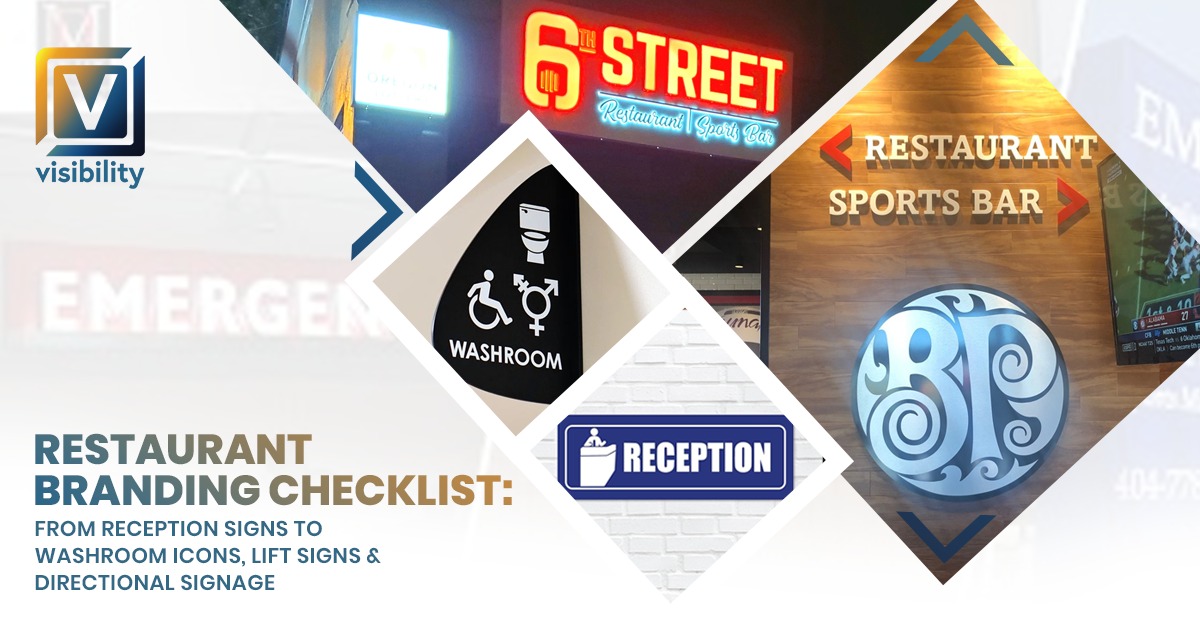
From reception signs that make a strong first impression to washroom icons, lift signs, and directional signage, every visual element plays a role in shaping how customers perceive your restaurant.
A well-planned signage system improves customer flow, reduces confusion, enhances ambiance, and strengthens brand identity. This checklist will guide you through every essential signage element needed to build a cohesive restaurant branding experience.
Reception Signs: Creating the First Impression
The reception area is the first physical interaction customers have with your restaurant brand. A reception sign sets the tone for everything that follows.
Reception signage should:
- Clearly display your restaurant name and logo
- Match your brand’s color scheme and theme
- Be placed at eye level for visibility
- Use materials that reflect your restaurant style (wood, metal, neon, acrylic, etc.)
A luxury restaurant may use backlit metal lettering, while a casual café might use wooden or chalkboard-style signage. The goal is consistency with your brand identity.
A strong reception sign builds trust instantly and communicates professionalism.
Also Read:
From Empty Space to Strong Brand: How Complete Signage Transforms Utah Retail Stores
Menu Boards: Guiding Customer Decisions
Menu boards are not just informational tools; they are part of your branding strategy. A poorly designed menu board can confuse customers, while a well-designed one can increase sales.
Key considerations for menu boards:
- Use readable fonts and clear spacing
- Highlight best-selling or signature dishes
- Organize items into logical categories
- Match design style with overall branding theme
Digital menu boards are becoming popular in modern restaurants because they allow easy updates and dynamic visuals. However, traditional printed or chalkboard menus still work well for themed or rustic environments.
Consistency between menu design and restaurant branding builds a smooth customer experience.
Directional Signage: Improving Customer Flow
Directional signage is essential in restaurants of all sizes, especially large dining spaces, hotels, or multi-floor venues.
These signs guide customers to:
- Entrance and exit points
- Seating areas
- Waiting lounges
- Restrooms
- Bar counters
- Private dining rooms
Without proper directional signage, customers may feel lost or frustrated, especially during busy hours.
Good directional signage should:
- Be simple and easy to understand
- Use universally recognized icons
- Be placed at decision points like hallways or intersections
- Maintain consistent design language across all signs
Clear navigation improves customer satisfaction and reduces staff workload.
Washroom Icons and Restroom Signage
Washroom signage is often underestimated, but it plays an important role in accessibility and user experience.
Washroom icons should be:
- Clear and universally recognizable
- Inclusive (consider gender-neutral or accessible signage where appropriate)
- Consistent with overall restaurant branding
- Visible from a distance
Materials like stainless steel, acrylic, or illuminated signs are commonly used depending on the restaurant’s design style.
In upscale restaurants, washroom signage can even be integrated into luxury design elements, maintaining elegance while remaining functional.
Proper restroom signage ensures comfort and avoids unnecessary confusion for guests.
Lift Signs and Floor Navigation
For multi-level restaurants or those inside hotels and malls, lift signage becomes essential.
Lift signage should include:
- Floor indicators
- Restaurant name on relevant floors
- Emergency instructions (if required)
- Directional arrows
Clear lift signage ensures that customers can easily locate your restaurant without asking for help repeatedly.
In addition, floor directories placed near elevators help guide guests efficiently. These are especially useful in commercial buildings where multiple restaurants or services exist.
Wall Branding and Interior Graphics
Interior branding is what transforms a restaurant from a simple dining space into an experience.
Wall graphics, murals, and branded elements can include:
- Inspirational quotes related to food or hospitality
- Brand story visuals
- Cultural or themed artwork
- Signature dish illustrations
These elements help build emotional connection with customers and encourage social media sharing.
Restaurants that invest in interior branding often experience stronger customer recall and repeat visits.
Table Signs and Small Detail Branding
Small signage elements on tables or counters may seem minor, but they significantly impact customer experience.
Examples include:
- Reserved table signs
- Wi-Fi information cards
- QR code payment or menu stands
- Promotional table tents
These small details reinforce professionalism and help streamline operations.
Even these micro touchpoints should match your overall branding style to maintain consistency.
Outdoor Signage and Storefront Branding
Before customers even enter your restaurant, outdoor signage is already communicating your brand.
Important outdoor signage elements:
- Main storefront sign
- Window graphics
- Outdoor banners or LED displays
- A-frame sidewalk signs
Outdoor signage should focus on visibility and attraction. It must be readable from a distance and stand out in surrounding environments.
A strong exterior sign increases walk-in traffic and brand awareness significantly.
Also Read:
Planning an Office Renovation? Here’s How to Handle Glass Branding, Wall Graphics & Signage Together
Safety and Compliance Signage
Every restaurant must include mandatory safety and compliance signage.
These may include:
- Fire exit signs
- Emergency evacuation routes
- No smoking signs
- Accessibility notices
While these signs are regulatory requirements, they should still be designed in a way that does not disrupt your branding.
Modern signage solutions allow safety signs to blend into interior design while remaining fully visible and compliant.
Consistency Across All Signage Elements
The most important rule in restaurant branding is consistency.
All signage elements should maintain:
- Same color palette
- Consistent typography
- Similar material choices
- Unified tone and visual identity
When signage feels disconnected, the brand experience becomes weak. But when every sign looks like part of one system, it creates a strong and memorable identity.
Consistency builds trust and enhances the overall dining experience.
Common Mistakes to Avoid
Many restaurants fail to use signage effectively due to common mistakes such as:
- Overcrowded designs with too much text
- Poor lighting on signs
- Inconsistent branding styles
- Incorrect placement of directional signs
- Ignoring accessibility needs
Avoiding these mistakes ensures your signage works as a powerful branding tool instead of a confusing visual element.
Also Read:
Why Your Office Looks Unprofessional (And How Signs, Door Plates & Wall Art Can Fix It Fast)
Final Thoughts
Restaurant branding is not limited to interiors or marketing campaigns. It is deeply connected to the physical environment and how customers move through it.
From reception signs that create first impressions to washroom icons that guide guests, and from lift signs to directional systems, every detail contributes to the overall experience.
A well-planned restaurant signage system improves customer satisfaction, increases efficiency, and strengthens brand identity. Investing in professional signage is not an expense—it is a long-term branding strategy that directly impacts business success.
Back